
Choose the right 3d printing process and material for your project
Compare key characteristics and benefits of various 3D printing materials to find the perfect fit for your design requirements.
Understanding Key key aspects in 3D Printing Materials
consider the following criteria in order to help you determine which is the right fit for your idea or project.
Durability and Strength
Learn how selecting robust materials enhances the longevity and reliability of your 3D printed parts, meeting demanding applications.
Flexibility and Finish
See how flexible materials and advanced finishes improve the functionality and aesthetic appeal of your designs.
Cost-Effectiveness
Discover ways to balance material costs with performance to maximize project value and production efficiency.
Explore 3D Printing Materials
Compare properties, applications, and benefits of popular 3D printing materials to choose the perfect fit for your project needs.
Thermoplastics
High-quality filaments engineered for precision and durability, ideal for functional prototypes and end-use parts.
Fast and easy for simple, small parts
Standard thermoplastics, such as ABS, PLA, and their various blends.
Some lines may be noticeable, some smoothing is possible. Some shrinkage may occur depending on filament used
Material Strength & Flexibility is possible with composites like carbon-fiber blends.
Filament choice limited by filament printing temperature requirements and printer capabilities
Support removal and optional sanding/finishing may be needed
Cost is much lower even for engineering
Common applications include Concept modeling rapid prototyping, functional prototyping, manufacturing aids
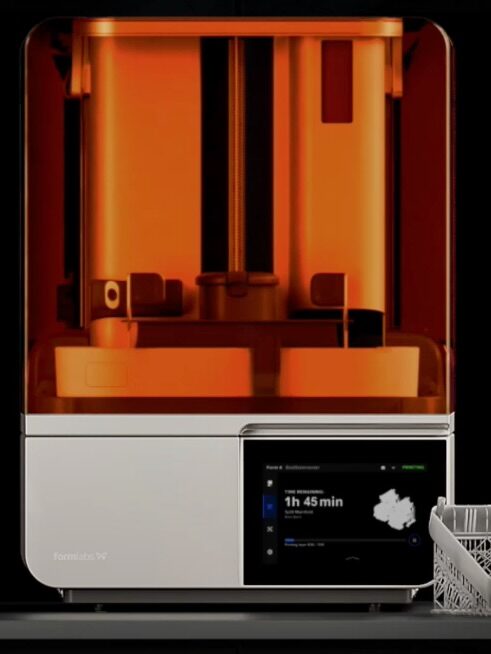
Resins
Advanced resins designed for fine detail and smooth finishes, perfect for dental, jewelry, and prototyping.
Produces highly accurate and smooth parts
Varieties of resin (thermosetting plastics). Standard, engineering (ABS-like, PP-like, flexible, heat-resistant, rigid glass-filled), castable, and dental and medical (biocompatible). Pure silicone and ceramic.
High durability and smooth surface finish is possible with certain resins
Print curing time and post processing is faster. Washing (IPA or water depending on resin) and UV curing, and handling liquid resin safely adds steps.
Support removal and optional sanding/finishing may be needed
Higher costs associated with resins
Common applications include Concept modeling, rapid prototyping, functional prototyping, rapid tooling, Manufacturing aids, Low volume, custom manufacturing, dental models, appliances medical models, medical devices, jewelry prototyping, casting, models and props
When to Use Which
| Need | Best Choice |
|---|---|
| High detail or smooth surfaces | Resin |
| Large functional parts | Filament/Resin* |
| Fast prototyping with minimal cleanup | Filament |
| Fine miniatures & jewelry | Resin |
| Outdoor or mechanically stressed objects | Filament/Resin |
Choose the Perfect Material for Your Project Now
Discover the advantages of each 3D printing material and get expert guidance to make the right choice. Contact us or book an appointment to move forward with confidence.